
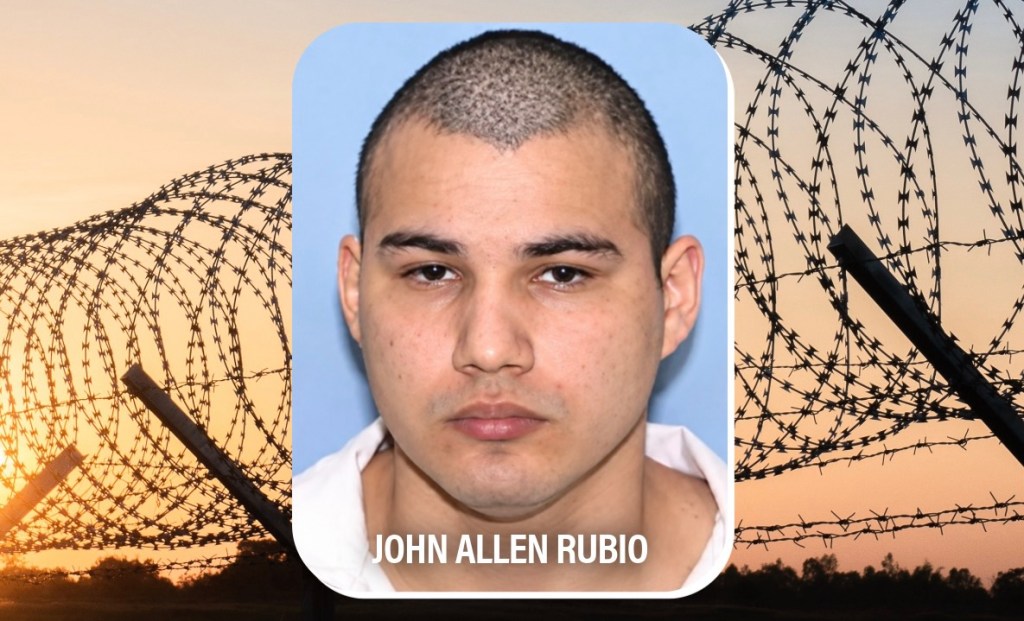
The Texas Board of Pardons and Paroles on Tuesday unanimously denied clemency for John Allen Rubio, clearing the way for his scheduled execution by lethal injection at the Huntsville Unit on Thursday, Nov. 12.
According to the Cameron County District Attorney’s Office, board members voted against both a 90-day reprieve and a commutation of Rubio’s death sentence to a lesser penalty. The decision comes days after the Texas Court of Criminal Appeals rejected Rubio’s request for a stay of execution.
Rubio, 46, was convicted of capital murder in the March 11, 2003, deaths of three children in a Brownsville apartment: 3-year-old Julissa Quesada, approximately 1-year-old John Esteban Rubio, and 2-month-old Mary Jane Rubio. Authorities said the children were stabbed and decapitated. Rubio’s common-law wife, Angela Camacho, was also convicted and is serving life in prison.
Rubio has long claimed the children were possessed by demons or the spirit of his deceased grandmother. Prosecutors have described the killings as occurring amid financial strain. He was first convicted and sentenced to death in 2003; that conviction was overturned in 2007. A second jury convicted him and imposed the death penalty in 2010.
In recent months, courts have rejected additional challenges. On Oct. 7, Cameron County District Judge Noe Gonzalez found Rubio competent to be executed after psychiatric evaluations, ruling that he understands he is to be executed and why. On Nov. 6, the Court of Criminal Appeals dismissed a defense motion seeking to delay the execution, describing repeated appeals as an abuse of the writ. The U.S. Supreme Court had earlier declined to review the case.
Cameron County District Attorney Luis Saenz has previously described the crime as one of the most brutal in the county’s history and said the community is looking forward to the scheduled execution date as justice being served for the children.
As of Tuesday evening, no further court filings that would automatically halt the execution had been reported. In Texas, the governor may grant a one-time 30-day reprieve without a board recommendation, but such action is rare.

